



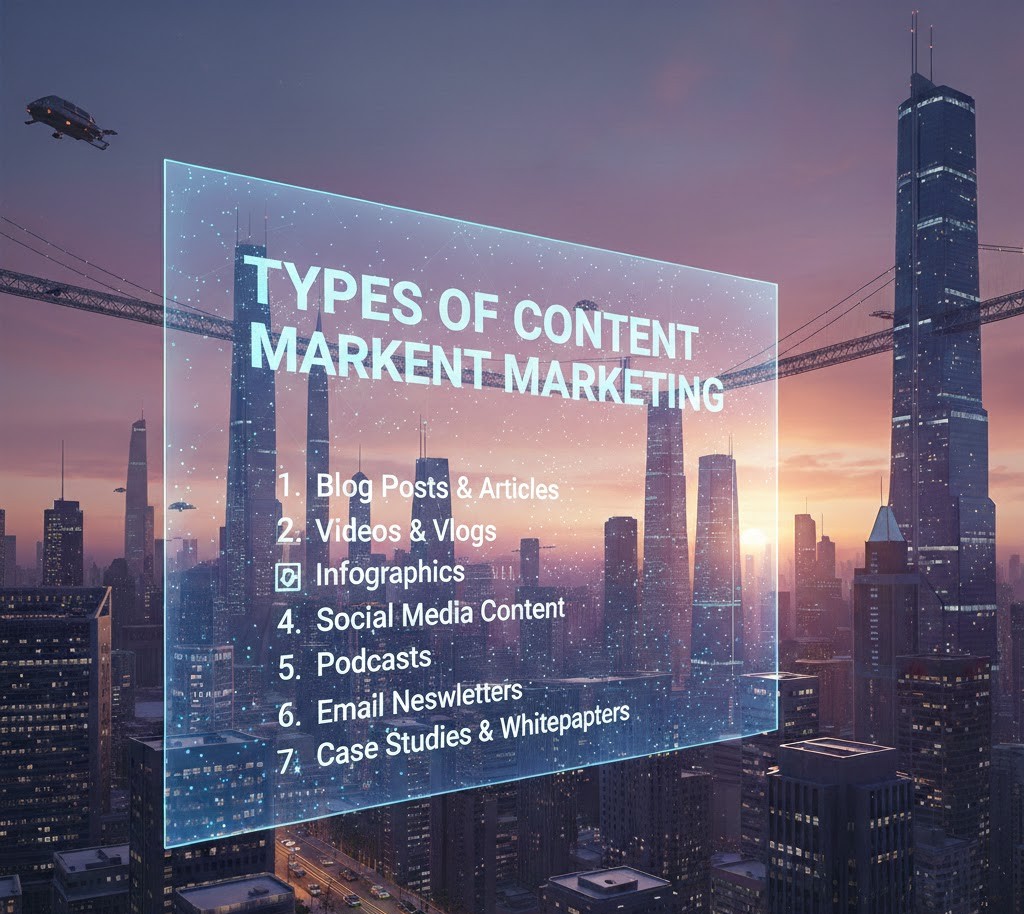
Types of Content Marketing
Introduction
Think about the last time you searched for something online. Maybe it was “how to start a side hustle,” “best laptops for college students,” or “how to lose weight safely.” You probably didn’t click the first ad you saw. Instead, you clicked a helpful blog post, watched a YouTube video, or read a detailed guide that answered your question.
That’s content marketing in action.
In today’s digital world, attention is currency. Brands, creators, and even small local businesses compete for visibility online. Content marketing is how they earn trust before asking for a sale. For students and beginners, understanding the types of content marketing is more than just a marketing lesson it’s a practical skill that opens doors to careers, freelancing, and online income.
In this article, you’ll learn what content marketing really means, the major types you should know, how each one works in real life, and how you can start building skills today. By the end, you’ll see content marketing not as a buzzword, but as a powerful strategy you can actually use.
What Is Content Marketing Really?
At its core, content marketing is the practice of creating and distributing valuable, relevant content to attract and retain a specific audience.
But let’s move beyond the textbook definition.
Content marketing is about helping before selling. Instead of directly pushing a product, a brand educates, informs, or entertains its audience. Over time, that trust turns into loyalty and eventually, revenue.
For example:
-
A fitness brand publishes workout guides.
-
A software company creates tutorial videos.
-
A university shares career advice blogs.
-
A small business posts Instagram tips for customers.
In each case, the content solves a problem. The sale comes later.
For students, this shift in thinking is important. Content marketing isn’t about flashy ads. It’s about understanding people’s needs and meeting them with useful information.
Why Content Marketing Matters in Digital Marketing
Digital marketing includes many channels: SEO, social media, email, paid ads, influencer marketing, and more. But content is the fuel that powers almost all of them.
Without content:
-
There is nothing to rank on Google.
-
There’s nothing to post on social media.
-
There’s nothing to send in emails.
-
There’s nothing to advertise.
Content marketing is not just one strategy — it’s the foundation of modern marketing.
Major Types of Content Marketing
Let’s explore the most important types of content marketing every beginner should understand.
1. Blog Content Marketing
What It Is
Blog content includes long-form articles published on websites. These posts are usually optimized for search engines (SEO) and designed to answer specific questions.
Examples:
-
“How to Save Money as a College Student”
-
“Beginner’s Guide to Investing”
-
“Best Study Techniques Backed by Science”
Why It Works
Blogs attract people who are actively searching for information. This is called intent-based traffic. When someone types a query into Google, they already have a need.
If your blog answers that need clearly and thoroughly, you gain:
-
Traffic
-
Authority
-
Trust
Real-World Example
A small online store selling skincare products writes detailed blog posts about “how to treat acne naturally.” Over time, these articles rank on Google. Visitors read the advice, trust the brand, and eventually buy products.
Beginner Takeaway
If you’re just starting out:
-
Learn basic SEO.
-
Practice writing clear, structured blog posts.
-
Focus on solving one problem per article.
Blogging remains one of the most powerful long-term content strategies.
2. Video Content Marketing
What It Is
Video content includes YouTube videos, Instagram Reels, TikToks, webinars, and tutorials.
Video is one of the fastest-growing content formats because it’s:
-
Easy to consume
-
Engaging
-
Visual and memorable
Types of Video Content
-
Educational tutorials
-
Product demonstrations
-
Behind-the-scenes content
-
Interviews
-
Explainer videos
Why It Works
Video builds connection. When people see your face and hear your voice, trust increases.
Platforms like YouTube also function as search engines. Many people now search directly on YouTube instead of Google.
Real-World Example
A tech reviewer posts laptop reviews on YouTube. Students watch detailed comparisons before buying. The creator earns through ads, affiliate links, and sponsorships.
Beginner Takeaway
You don’t need expensive equipment to start:
-
A smartphone is enough.
-
Focus on clarity and value.
-
Start with educational topics you understand.
3. Social Media Content Marketing
What It Is
This includes content shared on platforms like Instagram, LinkedIn, X (Twitter), Facebook, and TikTok.
Unlike blogs (which focus on search), social media content focuses on:
-
Engagement
-
Community
-
Brand personality
Types of Social Media Content
-
Short tips
-
Infographics
-
Polls and questions
-
Story-based posts
-
Carousels
-
Memes (if aligned with brand tone)
Why It Works
Social media builds relationships. It keeps your brand visible and top-of-mind.
Real-World Example
A personal finance educator posts daily budgeting tips on Instagram. Followers share posts, ask questions, and join the educator’s paid course later.
Beginner Takeaway
Understand the platform before creating content:
-
LinkedIn = professional insights.
-
Instagram = visual and storytelling.
-
TikTok = short-form, high-energy videos.
Consistency matters more than perfection.
4. Email Marketing Content
What It Is
Email marketing involves sending valuable content directly to subscribers.
This could include:
-
Newsletters
-
Educational sequences
-
Product updates
-
Exclusive offers
Why It Works
Email is personal. Unlike social media, where algorithms control visibility, email goes straight to the subscriber’s inbox.
It’s one of the highest ROI marketing channels.
Real-World Example
A career coach offers a free “Resume Checklist” in exchange for email sign-ups. Subscribers receive weekly career advice. Later, the coach launches a paid workshop.
Beginner Takeaway
Learn:
-
How to build an email list.
-
How to write compelling subject lines.
-
How to nurture subscribers before selling.
5. Infographics and Visual Content
What It Is
Infographics present information visually. They combine text, charts, and design to make complex topics easy to understand.
Examples:
-
Statistics breakdown
-
Step-by-step guides
-
Comparison visuals
Why It Works
People process visuals faster than text. Infographics are also highly shareable.
Beginner Takeaway
If you enjoy design:
-
Learn basic tools like Canva.
-
Focus on simplifying information.
-
Make data easy to understand.
6. Podcast Content Marketing
What It Is
Podcasts are audio-based content distributed on platforms like Spotify and Apple Podcasts.
Why It Works
Podcasts build deep relationships. Listeners often spend 20–60 minutes per episode, which creates strong trust.
Real-World Example
A business mentor hosts a weekly podcast interviewing entrepreneurs. Over time, the mentor builds authority and sells coaching programs.
Beginner Takeaway
If you’re comfortable speaking:
-
Start with simple equipment.
-
Focus on clear topics.
-
Stay consistent.
7. Ebooks and Long-Form Guides
What It Is
Ebooks and downloadable guides provide in-depth knowledge on a specific topic.
They are often used as:
-
Lead magnets
-
Authority-building tools
-
Premium content
Why It Works
Long-form content demonstrates expertise. It positions you as a serious professional.
Beginner Takeaway
Turn your best blog posts into structured guides. Add more detail and examples.
8. Case Studies and Testimonials
What It Is
Case studies show real results achieved by customers or clients.
They typically include:
-
The problem
-
The solution
-
The results
Why It Works
People trust proof more than promises.
Real-World Example
A digital marketing agency shares a case study showing how they increased a client’s website traffic by 200%. New clients feel more confident hiring them.
Beginner Takeaway
If you freelance or work on projects:
-
Document results.
-
Show before-and-after comparisons.
-
Use real data.
9. User-Generated Content (UGC)
What It Is
Content created by customers rather than the brand.
Examples:
-
Reviews
-
Social media mentions
-
Unboxing videos
Why It Works
UGC builds authenticity. People trust other consumers more than companies.
Beginner Takeaway
Encourage reviews and feedback. Highlight positive customer experiences.
How These Types Work Together
Content marketing is not about choosing just one type. Strong brands combine multiple formats.
For example:
-
A blog post becomes a YouTube video.
-
That video is turned into short clips for social media.
-
A summary is sent via email.
-
A detailed version becomes an ebook.
This is called content repurposing — a smart way to maximize effort.
Common Content Marketing Myths
Myth 1: “More content means more success.”
Quality beats quantity. One powerful article can outperform 20 weak ones.
Myth 2: “Content marketing is free.”
While publishing may be inexpensive, it requires time, research, skill, and strategy.
Myth 3: “It works instantly.”
Content marketing is long-term. It builds momentum over time.
Skills Students Should Start Learning
If you want to build a future in content marketing, focus on:
-
Writing clearly and persuasively
-
Basic SEO knowledge
-
Storytelling
-
Audience research
-
Data analysis (Google Analytics basics)
-
Content planning
These skills apply across industries from startups to global brands.
Career Opportunities in Content Marketing
Content marketing is not limited to “content writer.”
Career paths include:
-
SEO Specialist
-
Content Strategist
-
Social Media Manager
-
Video Content Creator
-
Email Marketing Specialist
-
Brand Storyteller
-
Digital Marketing Manager
Freelancing and remote work opportunities are also growing rapidly.
As businesses continue shifting online, demand for skilled content creators is increasing — not decreasing.
FAQs About Content Marketing
1. What is the most effective type of content marketing?
There is no single best type. Blog content works well for SEO, video builds trust, and email drives conversions. The best strategy depends on your goals and audience.
2. Is content marketing good for beginners?
Yes. It’s one of the most accessible digital skills. You can start with a blog, YouTube channel, or social media account with minimal investment.
3. How long does content marketing take to show results?
Typically, it takes 3–6 months to see noticeable growth, especially with SEO-based content. Consistency is key.
4. Do I need technical skills to start content marketing?
Not necessarily. Basic writing, communication, and research skills are enough to begin. Technical knowledge can be learned gradually.
5. Can students earn money through content marketing?
Absolutely. Students can freelance, manage social media accounts, start blogs, build YouTube channels, or work with brands.
Conclusion
Content marketing is more than just creating posts or writing articles. It’s a strategic approach to building trust, authority, and long-term relationships with an audience.
For students and beginners, understanding the types of content marketing is the first step toward mastering digital communication. Whether you choose blogging, video, email, or social media, the core principle remains the same: deliver real value before expecting results.
The digital world continues to expand. Businesses need creators, strategists, and storytellers who understand how to educate and engage online audiences.
If you start learning and practicing today, you’re not just building content you’re building a career-ready skill that will stay relevant for years to come.
Tags :
No Tags

0 Comments