



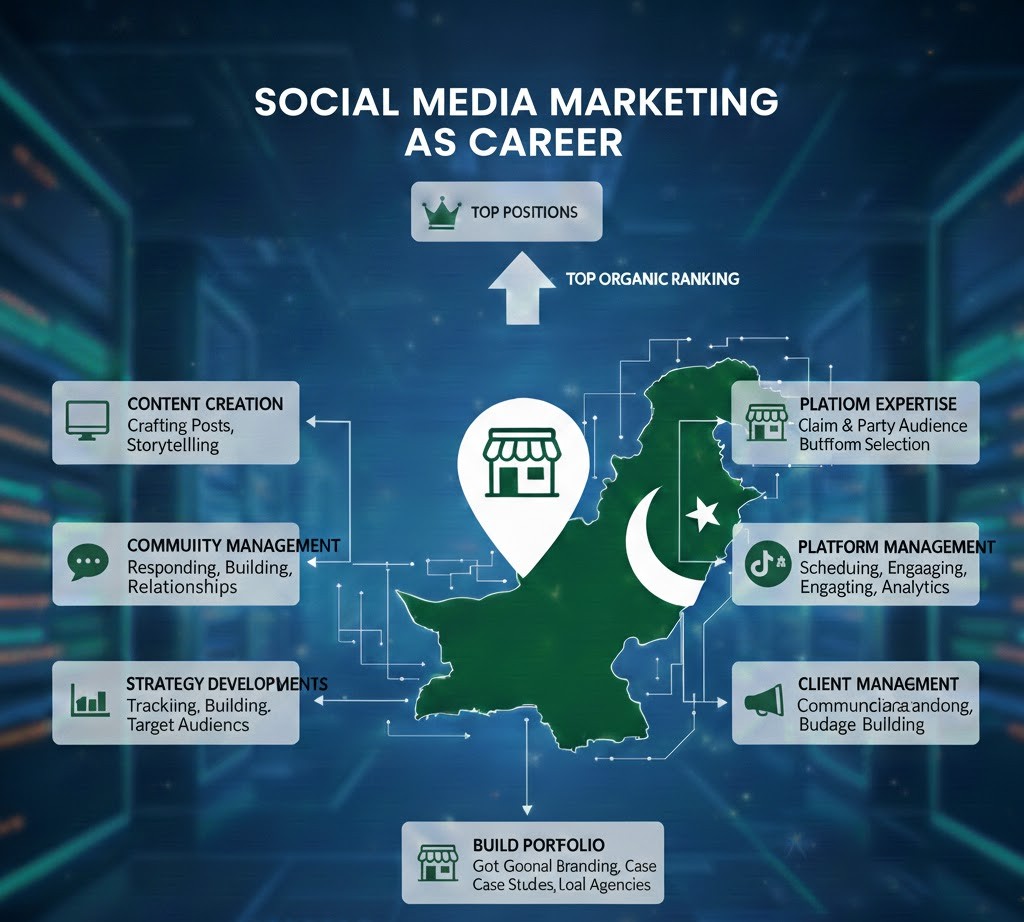
Social Media Marketing as a Career
Introduction
Scroll through Instagram, TikTok, LinkedIn, or X for just five minutes and you’ll see it everywhere: brands talking like people, creators building businesses from their bedrooms, and small startups competing with global companies for attention. Behind almost all of it is someone managing content, strategy, ads, analytics, and community. That someone is a social media marketer.
For students and beginners, social media marketing often feels confusing. Is it a “real” career or just posting photos? Is it stable long term? Do you need a degree, or can you learn it yourself? And with platforms changing so fast, is it even worth starting now?
This article answers those questions honestly and in depth. You’ll learn what social media marketing really looks like as a career, how it fits into modern digital marketing, the skills that matter most today, common myths beginners believe, and how job opportunities are evolving. Whether you’re a student exploring options or a beginner trying to choose a direction, this guide will help you decide if social media marketing is the right career path for you—and how to approach it smartly.
What Social Media Marketing Really Means as a Career
When people hear “social media marketing,” they often imagine posting pictures, writing captions, or chasing viral trends. That’s only a small part of the job.
At a professional level, social media marketing is about strategic communication and business growth through social platforms. The goal is not likes for the sake of likes, but measurable outcomes: brand awareness, trust, traffic, leads, and sales.
A social media marketer sits at the intersection of:
-
Marketing strategy
-
Psychology and human behavior
-
Content creation
-
Data analysis
-
Brand storytelling
In real jobs, this can mean:
-
Planning monthly or quarterly content strategies
-
Researching audience behavior and platform trends
-
Writing copy that aligns with a brand’s voice
-
Collaborating with designers, video editors, and ad specialists
-
Running paid social campaigns
-
Monitoring analytics and adjusting strategy
As a career, social media marketing is closer to being a digital communication strategist than a casual content poster.
How Social Platforms Actually Work (In Simple Terms)
To understand social media marketing as a career, you need to understand how platforms think.
Every major platform—Instagram, TikTok, YouTube, LinkedIn, Facebook exists to keep users engaged for as long as possible. Their algorithms prioritize content that:
-
Keeps people watching, reading, or interacting
-
Feels relevant to individual users
-
Encourages repeat usage
From a marketer’s perspective, this means your job is not to “beat the algorithm” but to align with human behavior:
-
What makes someone stop scrolling?
-
What keeps them watching?
-
What makes them trust a brand enough to click or buy?
Professional social media marketers study:
-
Content formats (short video, carousel, stories, long-form posts)
-
Timing and consistency
-
Audience intent at different stages (awareness vs. decision)
-
Platform-specific culture (what works on TikTok may fail on LinkedIn)
This understanding turns social media from guesswork into a repeatable skill.
Core Components of Social Media Marketing as a Career
Content Strategy and Creation
Content is the foundation of social media marketing. But in a career context, content is never random.
A content strategist asks:
-
Who are we talking to?
-
What problem are we solving?
-
What emotion or action do we want to trigger?
Content creation includes:
-
Educational posts
-
Entertaining short-form videos
-
Brand storytelling
-
Promotional content (used carefully)
For beginners, this is often the easiest entry point, but long-term growth comes from pairing creativity with strategy.
Community Management and Brand Voice
Social media is not a one-way broadcast channel. Real careers in this field involve conversation.
Community management includes:
-
Responding to comments and messages
-
Managing feedback (positive and negative)
-
Maintaining a consistent brand voice
-
Building trust over time
Brands value marketers who understand tone, empathy, and online reputation. One careless response can damage trust; a thoughtful one can build loyalty.
Paid Social Advertising
Organic reach alone is rarely enough for serious growth. Paid social ads are a major part of modern social media careers.
This includes:
-
Audience targeting
-
Ad creative testing
-
Budget management
-
Performance analysis
Many high-paying roles focus heavily on paid social because it directly connects social media activity to revenue.
Analytics and Performance Measurement
Likes feel good, but metrics keep you employed.
Professional social media marketers track:
-
Engagement rates
-
Reach and impressions
-
Click-through rates
-
Conversions and sales
Understanding analytics allows you to:
-
Prove the value of your work
-
Improve future campaigns
-
Speak the language of business stakeholders
This is where social media marketing becomes a serious, respected career.
How Social Media Marketing Fits into the Digital Marketing Ecosystem
Social media does not exist in isolation. In real businesses, it works alongside:
-
Search engine optimization
-
Email marketing
-
Content marketing
-
Influencer partnerships
-
Paid search and display ads
For example:
-
Social media builds awareness and trust
-
Email nurtures leads
-
SEO captures long-term demand
-
Paid ads accelerate growth
As a career, social media marketing becomes more valuable when you understand how it supports and connects with other channels. Students who think beyond platforms and focus on business outcomes grow faster professionally.
Real-World Examples of Social Media Marketing Careers
Consider a small e-commerce brand. A social media marketer might:
-
Research customer pain points
-
Create short videos demonstrating products
-
Run retargeting ads to website visitors
-
Engage with comments to answer objections
-
Analyze which content drives sales
In a larger company, roles become more specialized:
-
Social media strategist
-
Content manager
-
Paid social specialist
-
Community lead
Freelancers and creators may:
-
Manage multiple client accounts
-
Build personal brands
-
Offer consulting or coaching
The same core skill set adapts to different environments, which is why social media marketing careers are so flexible.
Common Myths Beginners Believe About Social Media Marketing
“You Need to Go Viral to Succeed”
Virality is unpredictable and often overrated. Sustainable careers are built on consistency, clarity, and results—not one lucky post.
“More Followers Automatically Mean More Money”
A smaller, engaged audience often converts better than a large, inactive one. Businesses care about outcomes, not vanity metrics.
“It’s an Easy Career”
Social media marketing looks simple from the outside, but real success requires discipline, learning, testing, and emotional resilience.
“You Have to Be on Every Platform”
Professionals focus on the platforms that matter most for their audience and goals. Focus beats overload.
Practical Skills Students Should Start Learning Today
If you’re serious about social media marketing as a career, focus on skills—not platforms alone.
Start with:
-
Writing clear, persuasive copy
-
Basic graphic and video editing
-
Understanding audience psychology
-
Reading analytics dashboards
-
Learning how ads work at a basic level
Equally important:
-
Communication skills
-
Time management
-
Adaptability
-
Continuous learning
Platforms will change. These skills will not.
How Social Media Marketing Careers Are Evolving
Social media marketing is maturing. Businesses now expect:
-
Strategic thinking, not just posting
-
Clear ROI and reporting
-
Ethical, authentic communication
-
Integration with broader marketing goals
New opportunities are emerging in:
-
Short-form video strategy
-
Creator-brand partnerships
-
Performance-based social roles
-
Social commerce
For students, this means the field is becoming more professional, not less. Those who treat it seriously will find long-term opportunities.
FAQs: Social Media Marketing as a Career
Is social media marketing a good career for students?
Yes. It offers low entry barriers, high demand, and flexible career paths, especially for students willing to learn consistently.
Do I need a degree to become a social media marketer?
A degree can help, but it’s not required. Skills, experience, and results matter more than formal education in this field.
How long does it take to build a career in social media marketing?
With focused learning and practice, many beginners see opportunities within 6–12 months. Mastery takes longer, like any profession.
Is social media marketing a stable long-term career?
Yes, especially for those who adapt and grow strategically. As long as businesses need attention and communication, this skill remains relevant.
Conclusion
Social media marketing is no longer just a trend or side hustle. It’s a real, evolving career that blends creativity, strategy, psychology, and business thinking. For students and beginners, it offers something rare: a field where skill matters more than background, and where learning is accessible to anyone willing to put in the effort.
The key is to approach social media marketing with professionalism. Focus on understanding people, platforms, and performance not shortcuts or hype. Build real skills, practice consistently, and think beyond likes and followers.
If you’re curious, adaptable, and ready to learn, social media marketing can become more than a job. It can become a long-term career that grows with you.
Tags :
No Tags

0 Comments