



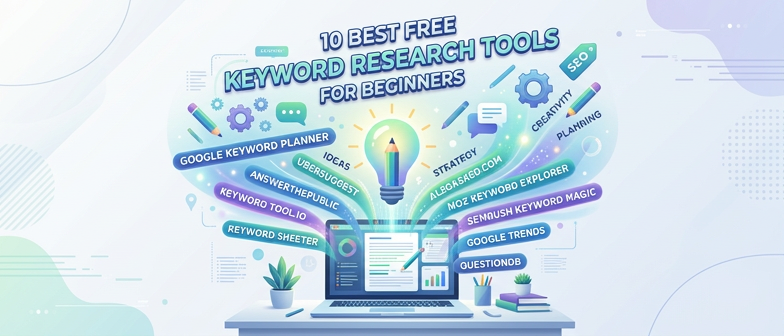
10 Best Free Keyword Research Tools for Beginners
Introduction
Imagine writing a blog post, publishing it with excitement, and then waiting days or even weeks for readers to appear only to discover that almost nobody finds it on Google. This situation happens to thousands of beginners every day. The reason is usually simple: they write content without knowing what people are actually searching for.
This is where keyword research becomes essential.
Keyword research is the process of discovering the words and phrases people type into search engines when looking for information, products, or services. When you understand these search terms, you can create content that matches what users want making it much easier for search engines like Google to show your pages to the right audience.
For students, bloggers, freelancers, and digital marketing beginners, learning keyword research is one of the most valuable skills you can develop. It helps you understand your audience, improve your content strategy, and increase your chances of ranking in search results.
The good news? You don’t need expensive software to get started. There are many free keyword research tools that provide powerful insights.
In this guide, we’ll explore the 10 best free keyword research tools for beginners, explain how they work, and show you how to use them effectively.
Why Keyword Research Matters in SEO
Before diving into tools, it’s important to understand why keyword research is the foundation of SEO.
Search engines aim to deliver the most relevant answers to users’ queries. If your content aligns with what people are searching for, Google is more likely to display your website.
Keyword research helps you:
-
Discover what your audience is searching for
-
Understand search demand
-
Identify low-competition opportunities
-
Create content that solves real problems
Without keyword research, SEO becomes guesswork. With it, your strategy becomes data-driven and intentional.
What Makes a Good Keyword Research Tool?
Not all keyword tools offer the same insights. The most helpful tools typically provide:
-
Search volume (how many people search for a keyword)
-
Keyword difficulty (how competitive a keyword is)
-
Related keyword suggestions
-
Search trends
-
User search intent
For beginners, the ideal tools are simple, intuitive, and free to use.
Let’s explore the best options.
1. Google Keyword Planner
Google Keyword Planner is one of the most trusted keyword research tools available because the data comes directly from Google.
Although it was originally designed for advertisers, SEO beginners can still use it to find valuable keyword ideas.
Key Features
-
Keyword suggestions
-
Search volume ranges
-
Competition insights
-
Forecast data
Why Beginners Should Use It
Because the data comes directly from Google’s advertising platform, it offers reliable keyword insights.
Practical Tip
Search for a broad topic like “digital marketing” and explore related keyword suggestions such as:
-
digital marketing course
-
digital marketing strategies
-
digital marketing for beginners
These suggestions can quickly inspire blog topics.
2. Ubersuggest
Ubersuggest is a popular SEO tool designed with beginners in mind. It provides keyword suggestions along with helpful metrics that make decision-making easier.
Key Features
-
Keyword suggestions
-
Search volume
-
SEO difficulty
-
Content ideas
-
Backlink insights
Why It’s Beginner-Friendly
The interface is simple and visually clear. Even someone new to SEO can understand the data quickly.
Example
If you search “keyword research”, Ubersuggest might suggest related phrases like:
-
keyword research tools
-
keyword research strategy
-
how to do keyword research
These variations help expand your content ideas.
3. AnswerThePublic
AnswerThePublic is a unique keyword research tool that focuses on questions people ask online.
Instead of showing only keyword data, it organizes search queries into categories such as:
-
questions
-
comparisons
-
prepositions
-
alphabetical suggestions
Why This Tool Is Powerful
It reveals how real users phrase their questions, which is extremely helpful for creating helpful content.
Example
If you search “SEO”, you might see questions like:
-
What is SEO in digital marketing?
-
Why is SEO important?
-
How does SEO work?
These questions can easily become blog topics or FAQ sections.
4. Google Trends
Google Trends shows how search interest changes over time.
Unlike traditional keyword tools, it focuses on search popularity and trends.
What You Can Discover
-
Rising search topics
-
Seasonal keywords
-
Regional search interest
-
Trend comparisons
Real-World Use
For example, searches for “AI tools” have increased dramatically in recent years. Recognizing this trend early helps content creators focus on topics that are gaining attention.
5. Keyword Surfer
Keyword Surfer is a free Chrome extension that shows keyword data directly inside Google search results.
What It Displays
-
Search volume
-
Related keywords
-
Similar search terms
Why It’s Useful
Instead of switching between tools, you can see keyword insights while browsing Google.
This makes it incredibly convenient for quick research and idea generation.
6. Ahrefs Free Keyword Generator
Ahrefs is one of the most powerful SEO platforms, and it offers a free keyword generator that provides valuable data for beginners.
Features
-
Keyword ideas
-
Keyword difficulty
-
Top ranking pages
-
Question-based keywords
Beginner Advantage
Even the free version provides high-quality keyword suggestions that can guide your content strategy.
7. Moz Keyword Explorer (Free Version)
Moz is another respected name in the SEO industry.
Its keyword explorer offers a free version that provides limited searches per month but delivers useful insights.
Key Metrics
-
Keyword difficulty
-
Opportunity score
-
Organic CTR
-
Keyword suggestions
Why It’s Valuable
Moz combines multiple metrics to help you determine which keywords are worth targeting.
8. SEMrush Keyword Magic Tool (Free Access)
SEMrush is widely used by professional marketers, but its free access still provides useful keyword research capabilities.
What You’ll Find
-
Large keyword database
-
Topic clusters
-
Keyword variations
-
Competitive insights
Real Benefit
It helps beginners understand how large websites structure their content strategy around keywords.
9. Google Search Autocomplete
Sometimes the most powerful keyword tool is the simplest one.
When you start typing in Google’s search bar, Google automatically suggests related searches. These suggestions come from real user search behavior.
Example
Typing “content marketing” might reveal:
-
content marketing strategy
-
content marketing examples
-
content marketing tools
These suggestions often represent highly searched queries.
10. People Also Ask (PAA)
The People Also Ask section on Google is another excellent free keyword resource.
When you search a topic, Google often displays related questions users frequently ask.
Why It’s Valuable
These questions reveal search intent and help you structure content that answers multiple related queries.
Practical Tip
Use these questions to create:
-
blog sections
-
FAQs
-
supporting articles
This improves your chances of ranking for multiple search terms.
How Beginners Should Use Keyword Research Tools
Having access to tools is helpful, but knowing how to use them effectively matters even more.
Here is a simple workflow beginners can follow:
Step 1: Start with a Broad Topic
Example:
-
SEO
-
freelancing
-
digital marketing
Step 2: Generate Keyword Ideas
Use tools like:
-
Ubersuggest
-
Google Keyword Planner
-
Ahrefs Free Keyword Generator
Step 3: Identify Long-Tail Keywords
Long-tail keywords are longer, more specific search phrases.
Example:
-
best SEO tools for beginners
-
how to learn SEO at home
-
SEO tips for small businesses
These keywords usually have lower competition and higher intent.
Step 4: Understand Search Intent
Ask yourself:
Is the user trying to:
-
Learn something?
-
Compare options?
-
Buy a product?
Content that matches search intent performs better in search results.
Common Keyword Research Mistakes Beginners Make
Even with the best tools, beginners sometimes make avoidable mistakes.
Targeting Only High-Volume Keywords
High search volume often means high competition.
Instead, focus on specific, low-competition keywords.
Ignoring Search Intent
A keyword may have high search volume but still be irrelevant to your audience.
Not Looking at Competitors
Analyzing competitor content can reveal keyword opportunities you might miss.
FAQs About Keyword Research Tools
What is the best free keyword research tool for beginners?
Google Keyword Planner, Ubersuggest, and AnswerThePublic are among the most beginner-friendly tools because they offer simple interfaces and useful keyword suggestions.
Are free keyword research tools accurate?
Free tools provide helpful estimates rather than exact data. However, they are still reliable enough for beginners starting their SEO journey.
How many keywords should a beginner target?
Instead of targeting dozens of keywords, beginners should focus on one primary keyword and several related variations for each piece of content.
What are long-tail keywords?
Long-tail keywords are specific search phrases that usually contain three or more words. They often have lower competition and higher conversion potential.
Can I do keyword research without tools?
Yes. Google autocomplete, related searches, and the People Also Ask section can reveal valuable keyword ideas even without dedicated SEO tools.
Conclusion
Keyword research is one of the most important skills anyone can learn in digital marketing. It bridges the gap between what people are searching for and the content you create.
For students and beginners, mastering this skill doesn’t require expensive software or advanced technical knowledge. The tools discussed in this guide such as Google Keyword Planner, Ubersuggest, AnswerThePublic, and Google Trends provide more than enough insights to start building a strong SEO strategy.
The key is to focus on understanding your audience. Instead of guessing what topics might work, keyword research allows you to make informed decisions based on real search behavior.
As search engines continue to evolve, the ability to identify valuable keywords will remain a core skill for bloggers, marketers, freelancers, and business owners alike.
Start experimenting with these tools, explore the questions your audience is asking, and use those insights to create content that genuinely helps people. Over time, you’ll not only improve your SEO skills you’ll also develop a deeper understanding of how the digital world connects information with those who need it most.
Tags :
No Tags

0 Comments