



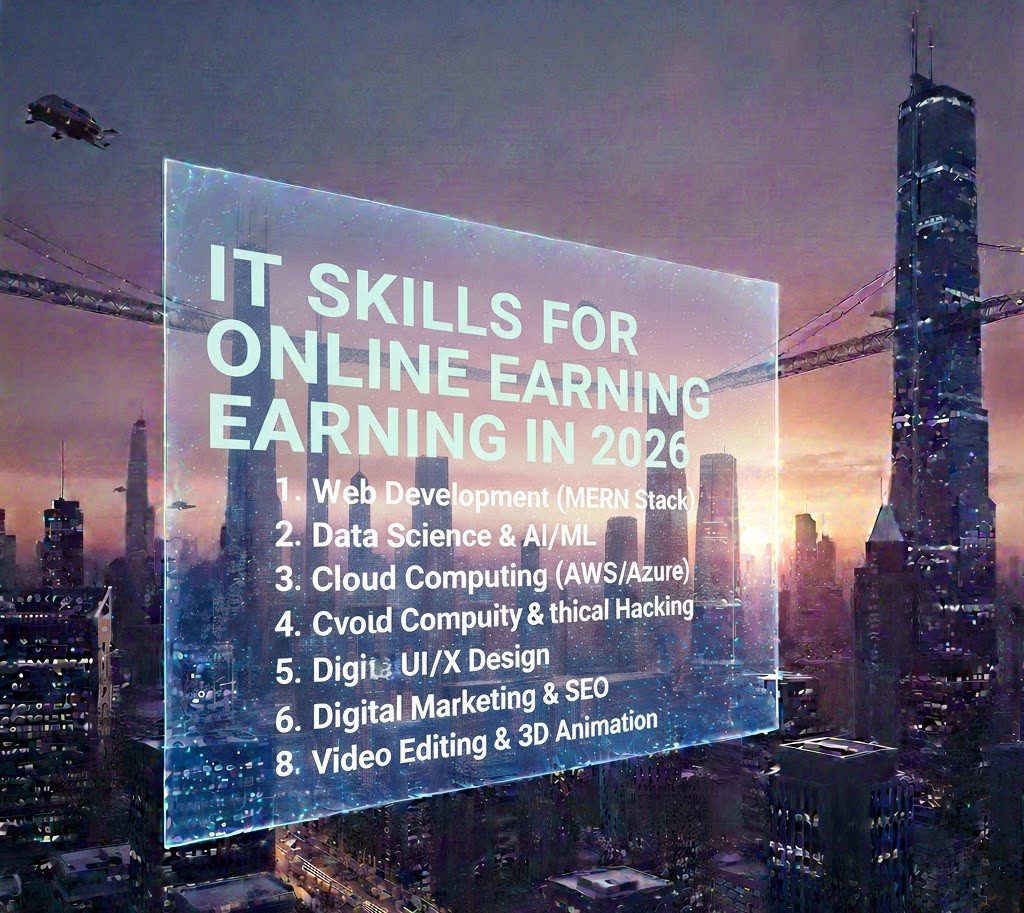
IT Skills for Online Earning in 2026
Introduction
Imagine being able to earn money from your laptop while sitting in your hostel room, at home during semester break, or even while traveling. Just a few years ago, that idea felt unrealistic for most students. In 2026, it’s not only realistic it’s becoming normal.
The digital economy is expanding rapidly. Businesses are shifting online, startups are going global from day one, and even small local shops are building digital presence. That shift has created a massive demand for practical IT skills not necessarily advanced degrees, but skills that solve real problems.
If you're a student or beginner wondering where to start, this guide will walk you through the most in-demand IT skills for online earning in 2026. You’ll understand what each skill involves, why it matters, and how you can start learning it even with limited experience.
Let’s break it down clearly and practically.
Why IT Skills Matter More Than Ever in 2026
The world is no longer asking, “Do you have a degree?” It’s asking, “What can you do?”
Companies are outsourcing tasks globally. Entrepreneurs are hiring freelancers instead of full-time employees. Platforms like Upwork, Fiverr, Toptal, and remote job boards are full of opportunities but they require skills.
IT skills are especially powerful because:
-
They are location-independent.
-
Most require only a laptop and internet connection.
-
You can start small and scale over time.
-
They allow freelancing, remote jobs, or even your own online business.
Now let’s explore the most valuable IT skills students should focus on in 2026.
1. Web Development: Building the Internet
What It Really Means
Web development is the skill of building websites and web applications. Every business from a bakery to a tech startup needs a website.
There are three main areas:
-
Frontend Development (what users see)
-
Backend Development (server-side logic and databases)
-
Full-Stack Development (both frontend and backend)
Why It’s Powerful for Online Earning
Web development has one of the highest demand-to-skill ratios. Even small businesses need landing pages, e-commerce stores, or custom features.
Students can start by learning:
-
HTML and CSS
-
JavaScript
-
Basic frameworks like React or Vue
-
WordPress development
You don’t need to master everything at once. Many beginners start by building simple WordPress websites and gradually move into custom development.
Real-World Example
A student learns WordPress and offers website setup services to local businesses. After building 10–15 websites, they start charging higher rates and move into custom theme development. What started as small gigs becomes a steady freelance income.
2. Digital Marketing: Helping Businesses Grow Online
Digital marketing is no longer optional — it’s essential. Every company wants traffic, leads, and sales.
Key Areas to Learn
-
Search Engine Optimization (SEO)
-
Social Media Marketing
-
Content Marketing
-
Paid Advertising (Google Ads, Meta Ads)
-
Email Marketing
Why It’s Ideal for Students
You don’t need coding knowledge to start. You need analytical thinking, creativity, and consistency.
Digital marketing is performance-based. If you can help businesses grow, you become valuable very quickly.
For beginners, start with:
-
Understanding how search engines work
-
Keyword research
-
Writing optimized content
-
Managing social media pages
This field also connects strongly with content creation and branding kills that can open many doors.
3. Graphic Design and Visual Content Creation
In 2026, visual communication dominates the internet. Every post, advertisement, and website needs good design.
What You’ll Work On
-
Social media posts
-
Brand identity
-
Logos
-
Thumbnails
-
Marketing materials
Tools beginners can learn:
-
Canva (great for starting)
-
Adobe Photoshop
-
Illustrator
-
Figma
Why It Pays
Businesses understand that poor design affects credibility. Even a small startup wants a professional look.
Many students start by designing Instagram posts for small brands. Over time, they move into branding packages and UI design — significantly increasing their rates.
4. Video Editing and Content Production
Video is dominating online platforms YouTube, TikTok, Instagram Reels, online courses, advertisements. The demand for editors has skyrocketed.
What You Need to Learn
-
Basic editing techniques
-
Color correction
-
Audio balancing
-
Story pacing
Tools to explore:
-
CapCut
-
Adobe Premiere Pro
-
Final Cut Pro
-
DaVinci Resolve
Many content creators don’t edit their own videos. They outsource. That creates consistent freelance opportunities.
A student editor working with just two YouTubers can earn more than a typical part-time job.
5. Data Analytics and AI-Related Skills
In 2026, data is everywhere. Businesses track user behavior, sales, traffic, and engagement.
Beginner-Friendly Skills
-
Excel and Google Sheets (advanced usage)
-
Data visualization
-
Basic SQL
-
Power BI or Tableau
-
Introductory Python for data analysis
Even without becoming a data scientist, being able to analyze data makes you valuable in marketing, e-commerce, and operations roles.
AI tools are also being integrated into workflows. Learning how to use AI for productivity rather than fearing it is a strong advantage.
6. Cybersecurity Basics
As businesses go online, cyber threats increase.
You don’t need to be an ethical hacker to start. Basic cybersecurity skills include:
-
Understanding network security fundamentals
-
Learning about data protection
-
Identifying vulnerabilities
-
Basic penetration testing concepts
Small companies often need security audits and guidance.
Cybersecurity certifications can significantly increase earning potential for students willing to specialize.
7. E-Commerce Management
Online stores are growing rapidly. Platforms like Shopify, WooCommerce, and Amazon require skilled managers.
What E-Commerce Skills Include
-
Product listing optimization
-
Store setup
-
Inventory management
-
Conversion optimization
-
Customer communication systems
Students who understand digital marketing and e-commerce together become extremely valuable.
For example, managing a Shopify store for a brand involves website setup, marketing campaigns, analytics tracking, and customer funnel optimization — a complete digital skill set.
8. UI/UX Design: Improving User Experience
Many websites fail not because of bad products, but because of poor user experience.
UI/UX design focuses on:
-
How users interact with apps and websites
-
Layout structure
-
Navigation flow
-
Visual clarity
Learning tools like Figma and understanding user behavior can help students enter product design roles.
In 2026, companies prioritize usability. Good UX increases conversion rates which directly impacts revenue.
9. Automation and No-Code Tools
One of the fastest-growing areas is automation.
Businesses want to:
-
Automate emails
-
Connect apps
-
Reduce manual tasks
Tools to learn:
-
Zapier
-
Make (formerly Integromat)
-
Notion automation
-
Airtable
-
Webflow
No-code tools allow beginners to build apps and workflows without deep programming knowledge.
This is an excellent entry point for students who are not comfortable with heavy coding but still want to work in tech.
10. Technical Support and IT Services
Remote IT support is growing. Many companies hire freelancers to:
-
Set up systems
-
Troubleshoot issues
-
Manage cloud tools
-
Configure software
Basic knowledge of:
-
Operating systems
-
Networking fundamentals
-
Cloud platforms like Google Workspace
-
IT troubleshooting
can help students start earning relatively quickly.
How to Choose the Right IT Skill
Many students make one mistake: trying to learn everything at once.
Instead:
-
Pick one core skill.
-
Practice consistently.
-
Build small projects.
-
Offer services at beginner rates.
-
Improve based on feedback.
For example, if you choose video editing, edit 20 sample videos before looking for paid work. If you choose web development, build 5 demo websites.
Skill plus practice equals confidence. Confidence attracts clients.
How IT Careers Are Evolving in 2026
The traditional job market is shifting.
Companies are hiring:
-
Remote-first teams
-
Project-based freelancers
-
Specialized consultants
Hybrid careers are emerging:
-
SEO + Content Strategy
-
Web Development + UX Design
-
Data Analytics + Marketing
-
AI Integration + Automation
The future favors adaptable professionals not those with only one static skill.
Continuous learning is essential. The students who thrive in 2026 are not the ones who know everything. They are the ones who keep learning.
Common Myths About Online IT Earning
“You need to be a genius in math.”
Not true. Many IT skills, like digital marketing, design, and content strategy, rely more on creativity and logical thinking than advanced math.
“You need expensive equipment.”
Most skills require only a decent laptop and stable internet.
“The market is too competitive.”
Yes, it’s competitive but demand is also growing. Skilled and consistent individuals always find opportunities.
“It takes years to earn.”
With focused effort, many students start earning within 3–6 months.
Practical Steps to Start Today
-
Choose one skill.
-
Find structured online courses.
-
Practice daily.
-
Build a small portfolio.
-
Join freelance platforms.
-
Offer services confidently.
The key is not perfection. It’s momentum.
FAQs About IT Skills for Online Earning
1. Which IT skill is easiest for beginners in 2026?
Digital marketing, graphic design, and video editing are often easier entry points because they require less technical setup than programming.
2. Can students earn part-time with IT skills?
Yes. Many freelancing tasks are project-based, allowing students to work alongside their studies.
3. Do I need a computer science degree?
No. Skills matter more than degrees in freelancing and remote work environments.
4. How long does it take to start earning online?
With consistent learning and practice, beginners can start earning within 3–6 months.
5. Are AI tools replacing IT jobs?
AI is changing workflows, not eliminating skilled professionals. Those who learn to work alongside AI will have a competitive advantage.
Conclusion: Your Digital Future Starts Now
In 2026, IT skills are not optional advantages they are economic opportunities. Students who invest time in learning practical, in-demand digital skills can create income streams that are flexible, scalable, and future-proof.
The most important lesson is this: don’t wait for the “perfect time.” Start with one skill. Learn deeply. Practice consistently. Improve gradually.
The digital economy rewards action.
Your laptop is not just a device for watching videos or scrolling social media. It can be your tool for independence, creativity, and income.
The future belongs to those who are willing to learn and start.
Tags :
No Tags

0 Comments