



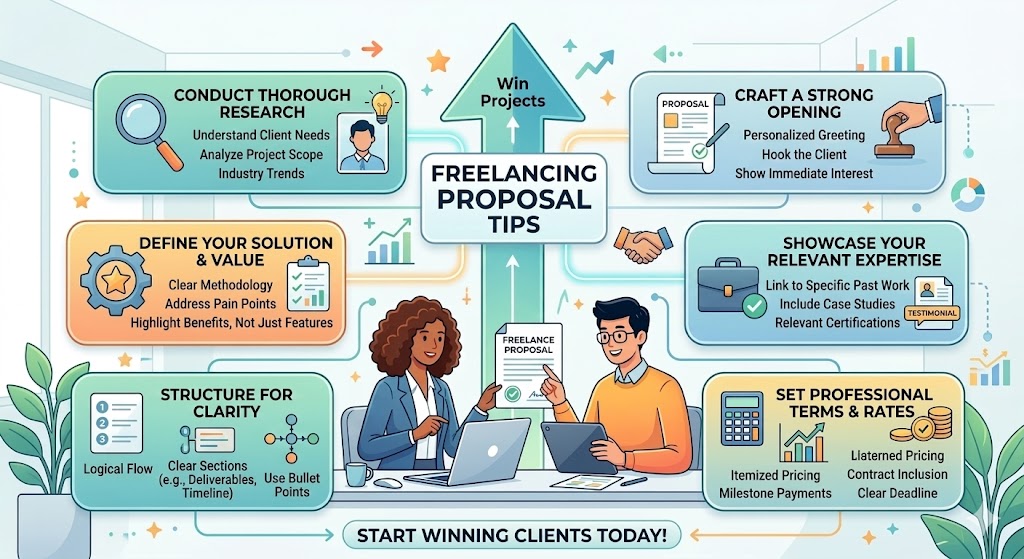
Freelancing Proposal Tips
Introduction
Imagine sending ten freelancing proposals and hearing absolutely nothing back. No replies, no interviews—just silence. This is one of the most frustrating experiences beginners face when starting their freelancing journey.
The truth is, many freelancers fail not because they lack skills, but because their proposal doesn't convince the client to respond. On platforms like Upwork, Fiverr, Freelancer, or even when pitching clients directly, your proposal is often the first impression you make. If it doesn't capture attention within seconds, it will likely be ignored.
For students and beginners entering freelancing, learning how to write an effective proposal is just as important as learning the skill itself. A strong proposal shows professionalism, builds trust, and clearly explains how you can solve a client’s problem.
In this guide, you’ll learn practical freelancing proposal tips that actually work. We’ll explore how proposals influence hiring decisions, what clients are really looking for, common mistakes beginners make, and how you can craft proposals that stand out—even if you have little or no experience.
By the end, you’ll understand how to structure, personalize, and improve your proposals to increase your chances of landing your first freelance job.
Why Freelancing Proposals Matter More Than You Think
Many beginners assume freelancing success depends only on skills. While skills are essential, clients cannot see your abilities immediately. Instead, they rely on your proposal to decide whether you're worth considering.
Think of a proposal as a mini sales pitch. Its purpose is to convince the client of three things:
-
You understand their problem
-
You have the ability to solve it
-
You are reliable and professional
Clients often receive dozens or even hundreds of proposals for a single job post. Most of these proposals are generic, rushed, and poorly written. A well-written proposal immediately stands out because it shows effort and understanding.
For beginners, this is good news. Even without a long portfolio, a thoughtful proposal can still win jobs.
Understanding What Clients Actually Want
Before writing any proposal, it's important to understand how clients evaluate freelancers.
Most clients ask themselves a few simple questions when reviewing proposals:
-
Does this freelancer understand my project?
-
Are they experienced or capable enough?
-
Do they communicate clearly?
-
Can I trust them to complete the work?
Your proposal should answer these questions naturally.
Beginners often focus too much on themselves:
“I am a hardworking freelancer with great communication skills…”
Clients are not primarily interested in you they are interested in their problem being solved.
Instead, effective proposals focus on the client’s needs first.
For example:
Bad approach:
“I'm an expert graphic designer with five years of experience.”
Better approach:
“I noticed you're looking for a modern logo for your startup. A clean and memorable logo can help build strong brand recognition, and I’d love to help design something that reflects your brand identity.”
The second version immediately shows understanding of the project.
How to Structure a Winning Freelance Proposal
A good freelancing proposal usually follows a simple structure. Think of it as a conversation with the client.
1. Start With a Personalized Opening
The first two lines determine whether the client keeps reading.
Avoid generic openings like:
-
“Dear Sir/Madam”
-
“Hello, I want to apply for this job.”
Instead, reference something from the job description.
Example:
“Hi John, I saw you're looking for someone to redesign your Shopify store homepage to improve conversions.”
This shows that you actually read the job post.
2. Show You Understand the Problem
After the opening, briefly explain the client's challenge.
For example:
“Many Shopify stores struggle with high bounce rates because their homepage doesn’t clearly guide visitors toward purchasing.”
This demonstrates awareness of the real issue, which builds credibility.
3. Explain How You Can Help
Now connect your skills to the client's problem.
Example:
“I’ve worked on improving store layouts by simplifying navigation, optimizing product sections, and designing clearer calls-to-action that guide customers toward checkout.”
Notice that the focus remains on results, not just skills.
4. Provide Relevant Experience or Examples
Even beginners should show examples whenever possible.
If you lack paid projects, use:
-
Personal projects
-
Practice work
-
Case studies
-
Portfolio samples
Example:
“I recently redesigned a practice e-commerce homepage that improved product visibility and user navigation. I'd be happy to share the design with you.”
Clients want proof even small examples help.
5. Ask a Thoughtful Question
Ending with a question encourages conversation.
Example questions:
-
“Do you already have brand guidelines for the redesign?”
-
“Is the main goal to increase conversions or improve the store’s visual identity?”
Questions show engagement and curiosity, which clients appreciate.
Common Freelancing Proposal Mistakes Beginners Make
Even talented freelancers struggle because they make simple but costly mistakes.
Sending Copy-Paste Proposals
Many beginners create one proposal and send it to every job posting.
Clients can easily spot generic messages.
If a proposal doesn’t reference the project specifically, it feels careless.
Always customize at least the first few lines.
Writing Proposals That Are Too Long
Clients usually scan proposals quickly.
A long wall of text can discourage them from reading.
Good proposals are:
-
Clear
-
Direct
-
Focused on the project
Aim for 150–250 words in most cases.
Talking Only About Yourself
A proposal full of statements like:
-
“I am hardworking”
-
“I am passionate”
-
“I have great communication skills”
doesn't tell the client how you'll help them.
Shift the focus from you → the client's goals.
Ignoring the Job Description
Sometimes clients include small instructions in their job posts like:
“Start your proposal with the word ‘Blue’ so I know you read the post.”
This helps them filter out spam.
If you ignore these instructions, your proposal may be rejected immediately.
Real-World Example of a Strong Freelance Proposal
Here’s a simple but effective proposal example for a beginner web designer:
Hello Sarah,
I noticed you're looking for someone to improve the layout of your WordPress blog to make it more reader-friendly.
Many blogs lose readers because important sections like featured articles and categories are not clearly organized. A cleaner layout can make content easier to explore and keep visitors engaged longer.
I’ve been working on WordPress layout design and recently created a blog homepage focused on readability and navigation. I’d be happy to share that example with you.
Could you tell me whether your main priority is improving readability or increasing newsletter signups?
Looking forward to hearing more about your project.
Best regards,
[Your Name]
This proposal works because it is:
-
Personalized
-
Focused on the client’s needs
-
Concise
-
Professional
-
Engaging
Practical Proposal Tips Students Should Start Using Today
If you're just starting freelancing, these habits can dramatically improve your response rate.
Apply Early
Many clients hire freelancers quickly.
Try to apply within the first hour of a job posting if possible.
Early proposals often receive more attention.
Research the Client
If the platform shows client history, check it.
Look at:
-
Previous projects
-
Reviews from freelancers
-
Budget range
This helps you tailor your proposal more effectively.
Keep Improving Your Proposal
Freelancing proposals improve with practice.
Track your results:
-
Which proposals get replies?
-
Which ones get ignored?
Adjust your approach based on feedback.
Build a Small Portfolio Quickly
Even beginners should create examples.
You can:
-
Redesign existing websites
-
Write sample blog posts
-
Create mock brand designs
These samples give clients confidence in your ability.
How Freelancing Opportunities Are Growing
Freelancing is expanding rapidly around the world. Businesses increasingly hire remote talent for tasks like:
-
SEO
-
Web design
-
Content writing
-
Social media marketing
-
Graphic design
-
Video editing
For students and beginners, this creates new opportunities to earn online while building real-world experience.
However, competition is also increasing. Freelancers who succeed are those who combine strong skills with effective communication, especially through proposals.
A well-written proposal is often the difference between being ignored and being hired.
FAQs About Freelancing Proposals
How long should a freelance proposal be?
Most effective proposals are between 150 and 250 words. Clients prefer clear and concise messages that quickly explain how you can help.
Should beginners send many proposals every day?
Yes. Beginners often need to send multiple proposals to get their first job. Focus on quality and personalization, not just quantity.
Do clients read every proposal?
Not always. Clients often scan proposals quickly. That's why your opening lines must immediately grab attention.
Can beginners win freelance jobs without experience?
Yes. Many beginners get hired by showing good communication, relevant samples, and a clear understanding of the client’s problem.
Is it okay to use templates for proposals?
Templates can help with structure, but every proposal should still be customized for the specific project.
Conclusion
Freelancing proposals are one of the most important skills beginners need to master. They are more than just job applications they are opportunities to demonstrate professionalism, understanding, and value.
A strong proposal doesn’t rely on complicated language or exaggerated claims. Instead, it focuses on understanding the client’s needs, explaining how you can help, and communicating clearly.
Students entering freelancing should view proposal writing as a skill that improves with practice. Every proposal you write teaches you something about how clients think and what they look for.
As freelancing continues to grow globally, those who learn how to present their skills effectively will have a significant advantage. With patience, consistent effort, and thoughtful proposals, even beginners can start landing projects and building successful freelance careers.
The key is simple: focus on solving problems, not just promoting yourself.
Tags :
No Tags

0 Comments